
Safety-Centered Operating Room Solution Design
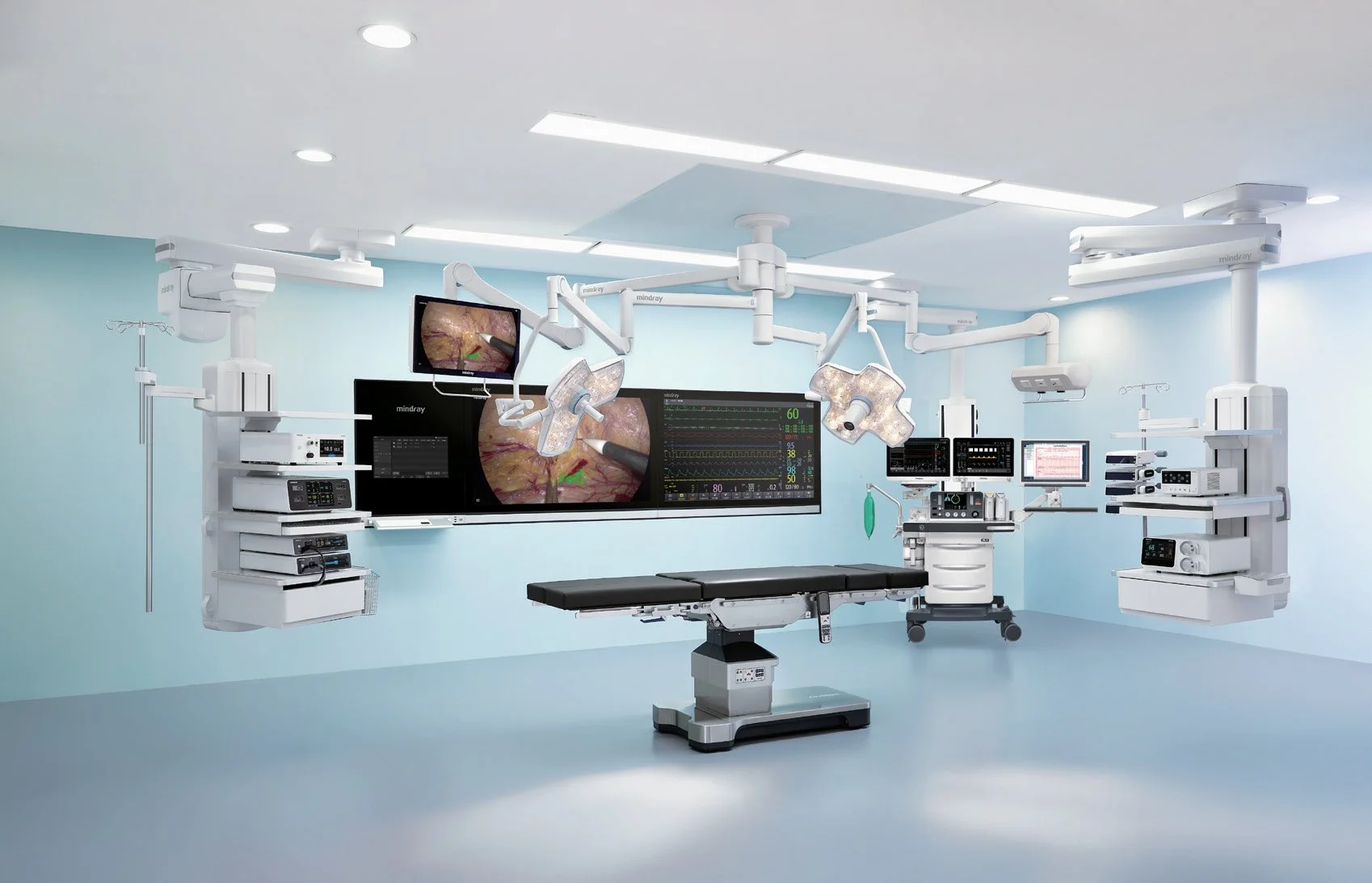
The operating room is a critical space for surgeries, examinations, and emergency procedures. As such, maintaining safety within this environment is essential to ensure successful outcomes for patients and the occupational safety of medical staff. The operating room is involved with many risk factors, such as improper patient positioning, incorrect surgical sites, inadequate management of surgical instruments, and lax disinfection and isolation, which may lead to accidents and additional harm to the patient during surgery. Therefore, ensuring safety in an operating room is of great significance for improving the quality of medical services, maintaining the occupational safety of medical staff, and reducing medical disputes.
Environmental Safety
1. Cable Management
Medical supply units are devices used to support medical equipment and provide optimized surgical and nursing space and various terminal interfaces in healthcare settings, such as operating rooms and ICUs. As minimally invasive surgery continues to evolve [1,2], the number of devices supported by medical supply units in operating rooms has been rising, leading to a clutter of electrical and data connections. This not only disrupts the cleanliness of the operating room but also creates operational challenges for the medical staff. In addition, the numerous cables are connected between the patient and the device, increasing the risk of device tilting. Therefore, cable management and organization solutions for surgical equipment should be optimized to address these challenges.
Requirements on cable management in operating rooms:
(1) Cables should be hidden and stored in bundles as much as possible, and not easy to fall off;
(2) Efforts should be made to avoid dirt around cables for smooth cleaning;
(3) When transferring the patient or equipment, the need to re-arrange cables should be reduced and the cables can be distinguished as easily as possible;
(4) The cables should cover a large area of mobile devices at the bedside;
Cable management solutions:
(1) The inner and outer cavities of the column are well designed so that the cables are hidden and fixed firmly with clamps in the column, so as to prevent poor connection of circuit interfaces due to pulling.
(2) The storing accessories are redesigned to accommodate endoscope lenses and foot switches, providing easier deployment of accessories;
(3) The redesigned load-bearing shelf has no deviations or blind sides, making it easy to clean. The drawer is designed to avoid cable compression, and its built-in partition facilitates organized storage and classification; also, the drawer is aesthetically designed and user-friendly, helping to enhance efficiency and avoid mistakes;
(4) The HyLink is small in size, lightweight, and upgradable. It can be directly connected to mobile devices, which helps to facilitate power and gas supply, avoid cables being dragged on the floor, and keep the surgical space clear of the medical supply unit. In case of a need to move a minimally invasive operation device, the docking station can be moved easily to ensure 360 ° wide-range access to the device beside the operating table.
2. Surgical Light Should Be Designed for Eye Protection
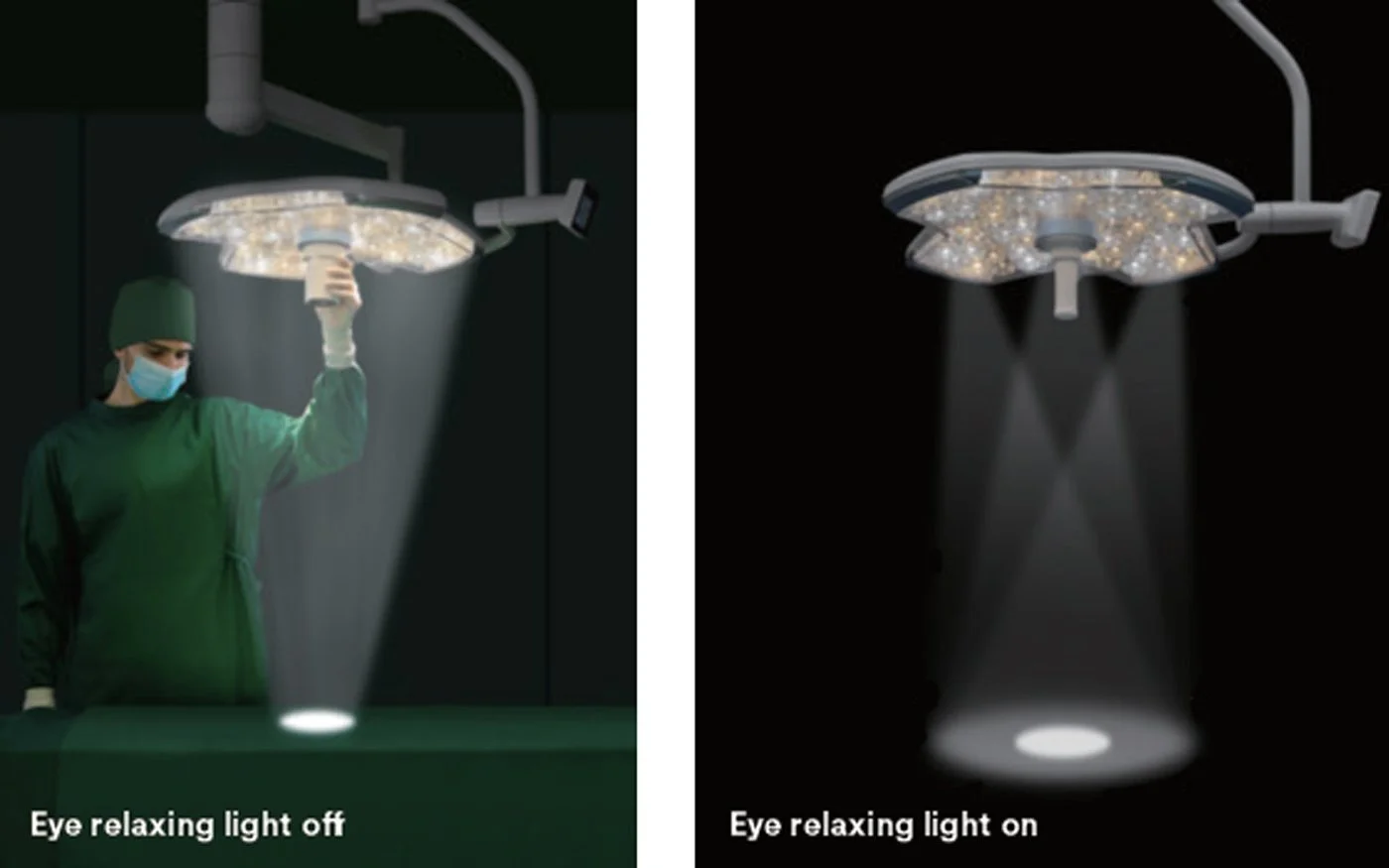
Surgical light, as a critical piece of equipment in the operating room, is used to provide Illuminance during surgeries. Adjusting the light intensity during surgery is a typical clinical practice. Appropriate light intensity helps surgeons observe the surgical area clearly and improve the accuracy of the procedure. When a surgeon feels insufficient light intensity, their first response is usually to increase the light intensity. However, a high brightness ratio with the surrounding area will be created when surgical lights provide very high illumination in the surgical area. An excessively high brightness ratio may cause eye discomfort or glare, leading to visual fatigue during the eye adaptation process and thus affecting the surgeon's performance[3-6]. Therefore, appropriate surgical lighting is particularly important for ensuring optimal surgical outcomes for patients and the occupational safety of medical staff.
As a commonly used dimming method, PWM (Pulse Width Modulation) dimming works by controlling the electronic circuit for quick on-off switching of LEDs. In other words, PWM dimming is a technique of alternating between on and off states. PWM dimming exhibits high brightness levels and good color consistency[7-9]. However, PWM dimming at low frequencies may cause a "flicker" phenomenon, which can easily cause visual fatigue. How this issue be prevented?
According to the assessments by the International Commission on Illumination (CIE), a dimming frequency greater than 1.5 kHz effectively reduces the harm of flicker to human eyes. Therefore, using high-frequency PWM dimming is an effective solution[10-12]. Mindray's C series and X series surgical lights utilize high-frequency PWM dimming (no less than 10kHz), far above the standard recommended by the CIE and well beyond the human eye’ s perceptible range. This helps to eliminate harmful flicker and visual ripples, alleviating visual fatigue during surgery.
In addition, the surgical lights from Mindray are designed with unique soft light, and the illumination ratio is designed based on the recommendations of the CIE. Also, it is ensured from a design perspective that the illumination ratio between the surgical field and the surrounding area under different illumination and light spots remains within the comfort range of nearly 40:1 recommended by guidelines. This helps to minimize pupil regulation caused by excessive light contrast and effectively reduce visual fatigue [13,14].
Equipment Safety
In addition to environmental safety, the safety of equipment in the operating room is equally important. Surgical equipment is an important tool for the smooth progression of surgeries. With the rapid advancement of modern surgery techniques, the number of surgical devices has increased, and the requirements for equipment safety are becoming increasingly stringent.
Waterproofing Operating Tables
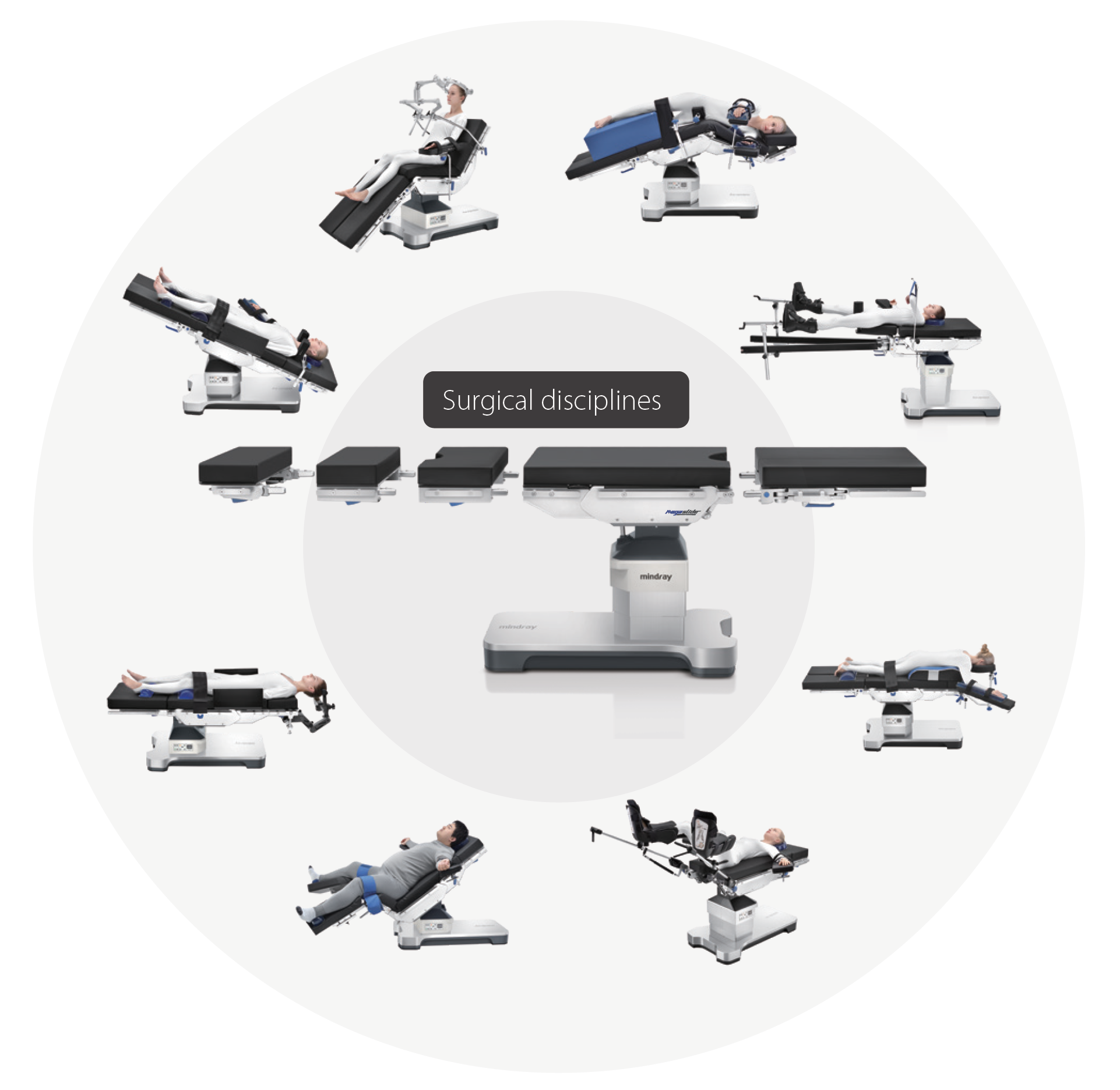
The operating table supports the patient during surgery and allows for adjustments to the patient's position based on the requirements of the procedure. It provides a convenient operating environment for the surgical team. A large amount of flushing fluid is often required for urological surgery[15]. As a result, the operating table, and the floor may be wet with such liquid, potentially disrupting the normal function of the operating table and impacting the progress of the surgery. In addition, the prolonged erosion of the flushing fluid may cause rust to the internal structure of the operating table and reduce its service life. Therefore, the waterproofing of the operating table is particularly important.
Mindray's V series operating tables are fully IPX5 waterproof. To be specific, waterproof covers are added to the base interface, allowing the operating table to operate normally even when directly exposed to water spray from any direction. Also, the "integrated design" is an outstanding feature of Mindray's V series operating tables. The column guards are free of wrapping wrinkled leather, the base is designed with a large stainless steel plate, and the table top features compact gaps. These design elements not only ensure safety during use but also facilitate daily cleaning and maintenance of the operating table.

Equipment Aging Resistance
Ultraviolet lights and medical disinfectants are common equipments in the operating room. Ultraviolet disinfection is usually performed after the operation, where ultraviolet radiation is used to kill pathogenic microorganisms suspended in the air, thereby achieving sterilization and disinfection. Due to the high energy of ultraviolet rays, prolonged exposure can damage the molecular structure of the devices’ shell material, leading to material aging and changes in its properties, such as yellowing, decreased strength, and toughness[16]. Frequent wiping with disinfectants may also cause deteriorated material performance.
Mindray's surgical lights and medical supply units are made of high-quality and high-strength materials, which are 15% stronger than ordinary materials. These materials are resistant to up to 30 types of disinfectants (covering nearly all commonly used disinfectants in operating rooms), effectively prolonging the equipment's service life.
Oxygen Concentration Warning
As an indispensable piece of equipment in an operating room, medical supply units provide various gas sources for surgery, including oxygen, compressed air, negative pressure gas, nitrous oxide, nitrogen, and carbon dioxide. In the event of an oxygen leak, which creates an oxygen-rich environment, there will be a risk of fire when a fire source (such as electric sparks generated when a power plug is inserted into a socket) or combustible materials (such as plastic casings) are exposed in such an environment. According to statistics from the US FDA, there are 550–650 surgical fires each year[17]. Therefore, the potential risks and hazards associated with oxygen leakage should be carefully considered during the development and design of medical supply unit products.
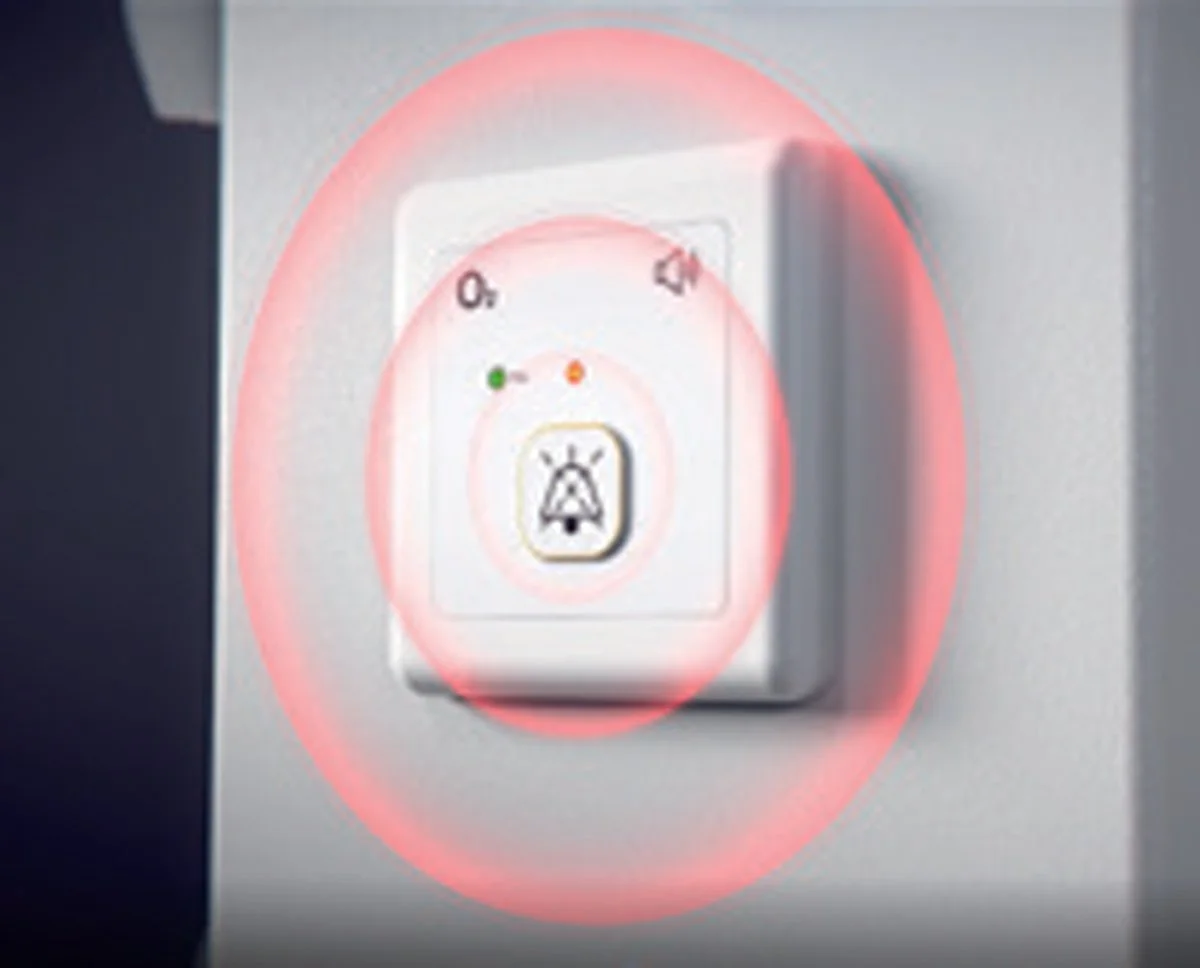
According to appropriate standards, the oxygen concentration inside the distribution module should not exceed 25%. Mindray's oxygen concentration warning module can provide audible and visual alarms when the oxygen concentration exceeds the specified limit. Oxygen concentration measurement is based on three basic principles: ultrasonic, electrochemical (oxygen battery), and paramagnetic oxygen. Mindray's oxygen concentration warning module utilizes the more advantageous ultrasonic method for measuring oxygen concentration.
Its advantages are described as follows:
(1) Universally applicable: supports a wide range of power supplies (110 V–220 V and 50 Hz/60 Hz);
(2) One-time installation for long-term use, no consumables required, and no material consumption (e.g., electrochemical reactions);
(3) Maintenance-free and no calibration required during the entire life cycle;
(4) In the event of an out-of-limit condition, the orange indicator light will activate an alarm, which complies with the latest AU/NZ standards governed by the Therapeutic Goods Administration (TGA). They are the Australia Government authority responsible for evaluating, assessing and monitoring products that are defined as therapeutic goods. They regulate medicines, medical devices and biologicals to help Australians stay healthy and safe. This also complies with EU standards"IEC 60601-1 Edition 3.0 2020-08".
(5) The alarm tone can be muted by pressing a button to avoid disturbing the patient's rest.
The medical supply unit is equipped with this oxygen concentration warning module. When the oxygen concentration inside the distribution module exceeds the threshold specified in appropriate standards, an audible and visual alarm will be triggered to help mitigate safety risks. The oxygen concentration can be monitored in real-time without human intervention, which helps to improve work efficiency while ensuring equipment safety.
Patient Safety
Patient safety is at the core of safety in operating rooms. There are several risk factors during surgery, such as improper patient positioning, which may lead to accidents and additional harm to the patient. Therefore, ensuring patient safety and improving patient comfort are crucial elements in the design and construction of an operating room.
Color-coded Indication of Operating Table
The operating table plays a vital role in an operating room. It must not only accommodate the surgeon's optimal working distance but also prioritize the safety and comfort of the patient. A well-designed operating table helps to reduce the difficulty and risks of surgery.
Currently, laparoscopic surgery and even robotic surgery are widely used in surgical procedures[20]. To better expose the operating field during laparoscopic surgery, nurses often work with the surgeon to adjust the tilt to left/right or Trendelenburg /reverse Trendelenburg position of the operating table[18-20]. However, the operating table is covered with sterile sheets during surgery, meaning medical staff can only adjust the operating table by relying on their experience or lifting the sheet to check the patient’ s position, which reduces work efficiency and increases the clinical risks to the patient.
With the advancement of operating tables, a remote controller has been developed to display real-time adjustments of the operating table's angle on a screen, allowing medical staff to detect any deviations in the table's angle. However, simple angle prompts alone are insufficient to effectively and intuitively indicate the intraoperative risks associated with angle adjustments. As a result, patients may still experience postoperative complications of varying severity due to improper positioning of the operating table. Furthermore, the intraoperative risks associated with angle adjustments can vary depending on the patient, the type of surgery, and the duration of the procedure.
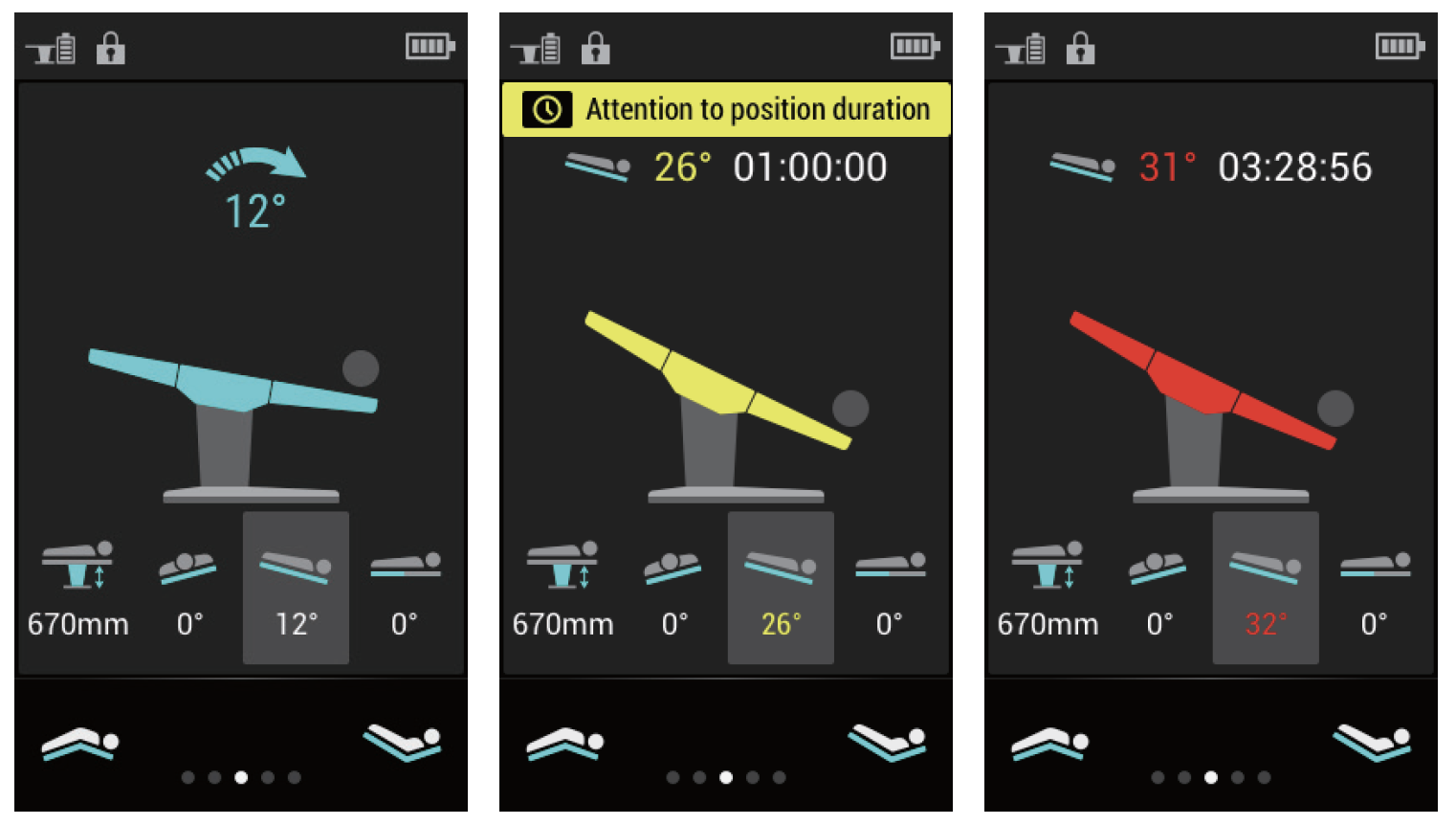
In response to the clinical challenges associated with operating table angle adjustments, we have developed a dynamic color-coded indication technology of the operating table’ s angle. This technology is designed to address the need for indicating diverse intraoperative risks across different patients, types of surgeries, and procedure durations, enabling medical staff to take more timely and more effective intervention measures.
(1) The color-coded indication technology can detect operating table's angle automatically;
(2) Different color status indicates the urgency of the warning, corresponding to the angle of the patient's position;
(3) The risk level can be adjusted by medical staff, depending on the patient’s condition;
(4) Total time indications are provided based on the risk level, along with a prompt. Additionally, recommendations are given regarding the risk associated with the current angle based on how long it lasts.
The color-coded indication technology aids surgeons in quickly understanding real-time patient’ s position and making confident decisions, significantly enhancing the efficiency of medical staff and reducing clinical operation risks for patients.
Conclusions
Mindray's comprehensive operating room solution helps to create a safe, efficient, and sterile environment by optimizing cable management and storage, while leveraging innovative technology to provide safe and comfortable surgical lighting. Strict waterproofing standards for operating tables, the use of high-quality equipment materials, and real-time, accurate oxygen concentration warning all contribute to ensuring the safe and efficient performance of surgical equipment. The dynamic, color-coded indication technology for operating table angle adjustments addresses the diverse intraoperative risk warning needs for various patients and types of surgeries, ensuring patient safety.
A safe and efficient operating room not only improves the quality of surgery but also provides a better working environment for medical staff. Mindray is committed to providing hospitals with safe and efficient comprehensive operating room solutions, helping them achieve greater economic and social benefits while taking the design and construction of modern operating rooms to a new stage.
Have a question?
Enter your details here to enquire on our product offering and how we can best service your clinic.